

The Difference Between Manga and Anime
And The Different Experiences They Offer

One is black and white, the other has color.
One is on paper and ink, the other is digital.
One is still images, the other is animated.
Let’s wrap it up here folks, the difference is clear!…
Or is it?
As life has gotten busier, I’ve gotten into manga—Japanese comics/graphic novels— far more consistently than I have anime, their animated counterpart. To be honest, as an English teacher, I simply don’t have the time to spend 20 to 25 minutes to watch an entire episode—and so, I subsist on time-efficient, bingeable chapters of a manga.
And yet, sometimes, I find myself asking; “How did the anime do it?” “Is there a difference?” “Was this anime better than the source material?”
It made me curious; really, are the two comparable at all? After all, they are two entirely different mediums, right?
Well, let’s see.
I. Manga vs Anime
It seems rather obvious, the differences and similarities between anime and manga on the surface. In fact, to most, Anime can just be the animated counterpart of Manga—to the point where many people will ask, with popular manga, when the anime adaptation will come out. However, a closer examination reveals a few more intricacies, that make the mediums very, very distinct.
Characteristics of Anime
Animation: A focus on fluid, well-animated movements
Budget: Paradoxically, animation studios, a thriving industry, and the usage of many shortcuts, make anime slightly less expensive to produce than
Music: With an animated show, also comes a need for a soundtrack to give it life.
A Team: Between animators, voice actors, directors, CG artists, and far more, the teams behind our favorite anime are often wide and sprawling.
Voice Acting: Oftentimes, voice actors are able to breathe their own life into a character.
Characteristics of Manga
Art: A focus on beautiful still images versus fluid movement.
Movement/Paneling: Movement is only given form through the effects, talents, and paneling that the mangaka/artists utilize.
Budget: Oddly enough, manga tend to be more expensive on the whole to produce, due to the higher quality associated behind the work to the mangakas, the editors, and the costs of distribution.
A Team: With mangakas, artists, and editors, the team for creating manga tends to be smaller, more focused around the particular mangaka.
II. The Resulting Differences in Storytelling
If you look at these characteristics individually, they may seem innocuous; however, these differences result in entirely different criteria for what makes a story told in that medium “good” or “bad.”
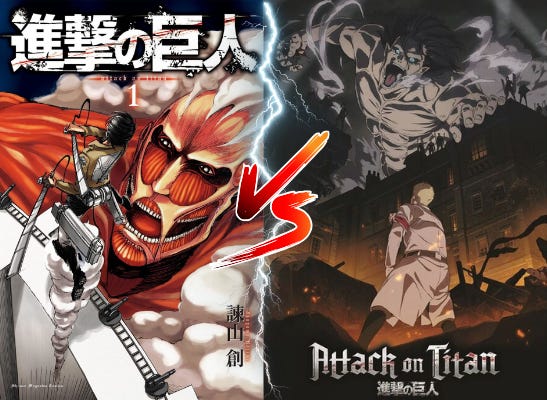
To see such differences, we can look at two example cases—first, being the sensation that many credit as being their first anime of all time, Attack on Titan, or Shingeki no Kyojin.
Attack on Titan: A Gorgeous Anime, A Decent Manga


This series has been among the most highly rated anime of all time. A particular run of its episodes is known for being among the top rated television episodes of all time on IMDB, and beyond that critical success, it is known for gorgeous, well-animated scenes, a killer soundtrack, and a consistent narrative that not many anime can boast to have.
However, the manga…doesn’t quite have that.
It’s been noted that mangaka Hajime Isayama did not quite have the artistic chops to match his storytelling—and although he did improve over the course of the series, to claim the manga was anywhere near the same experience of the anime would have been a huge stretch. It was clear, by most people’s standards, that the anime strictly outpaced and outperformed the manga—which makes sense, considering that many people would consider the movement, the music, the voice acting, FAR more engaging to most than a static image.
That isn’t the case for all series though; as can be seen with the anime and manga of recent hit series, Sakamoto Days.
Sakamoto Days: A Beautiful Manga With A Decent Anime Adaptation


I mean…just look at this.
Sakamoto Days has grown a dedicated fandom that has become enamored with the story of retired hitman Sakamoto Taro, his protege Shin, and the adventures that pit them against the Japanese Assassin’s Association. It’s a neat concept as a story, that is given life by the beautiful paneling and action scenes that the manga creates.
The individual skill of artist and mangaka Yuto Suzuki is on full display, in a way that cannot be understated. It is known for some of the best action in the business, with dynamic, flowing, and seamless shots that have amassed a huge fanbase, eager for the anime adaptation.
However, once it came out, the reception was…lukewarm, to say the least. The anime was not, and is not, bad by any means—in fact, as of the second season, it is universally acknowledged as having improved a lot. Despite this, many fans of the manga panned the anime at first, noting that it simply didn’t have the same weight and impact as the manga.
It’s simply different; but that’s okay. These differences, after all, are nothing new. In fact, they actually showcase that both these mediums, more so than simply having different traits, also have different criteria and measurements for what makes them “good” or “bad.”
III. The Criteria for A “Good” Story
If we break stories down on paper, there can usually be some inkling that the core concept and story is good. There are good characters, themes, a consistent plot—but stories aren’t just about how it all breaks down on paper.
In fact, each medium, depending on the type of story being told, can offer its own strengths, unique only to itself—and the manga or anime that excel at its medium’s respective strengths will often find themselves being lauded as great works.
Manga's Unique Strengths
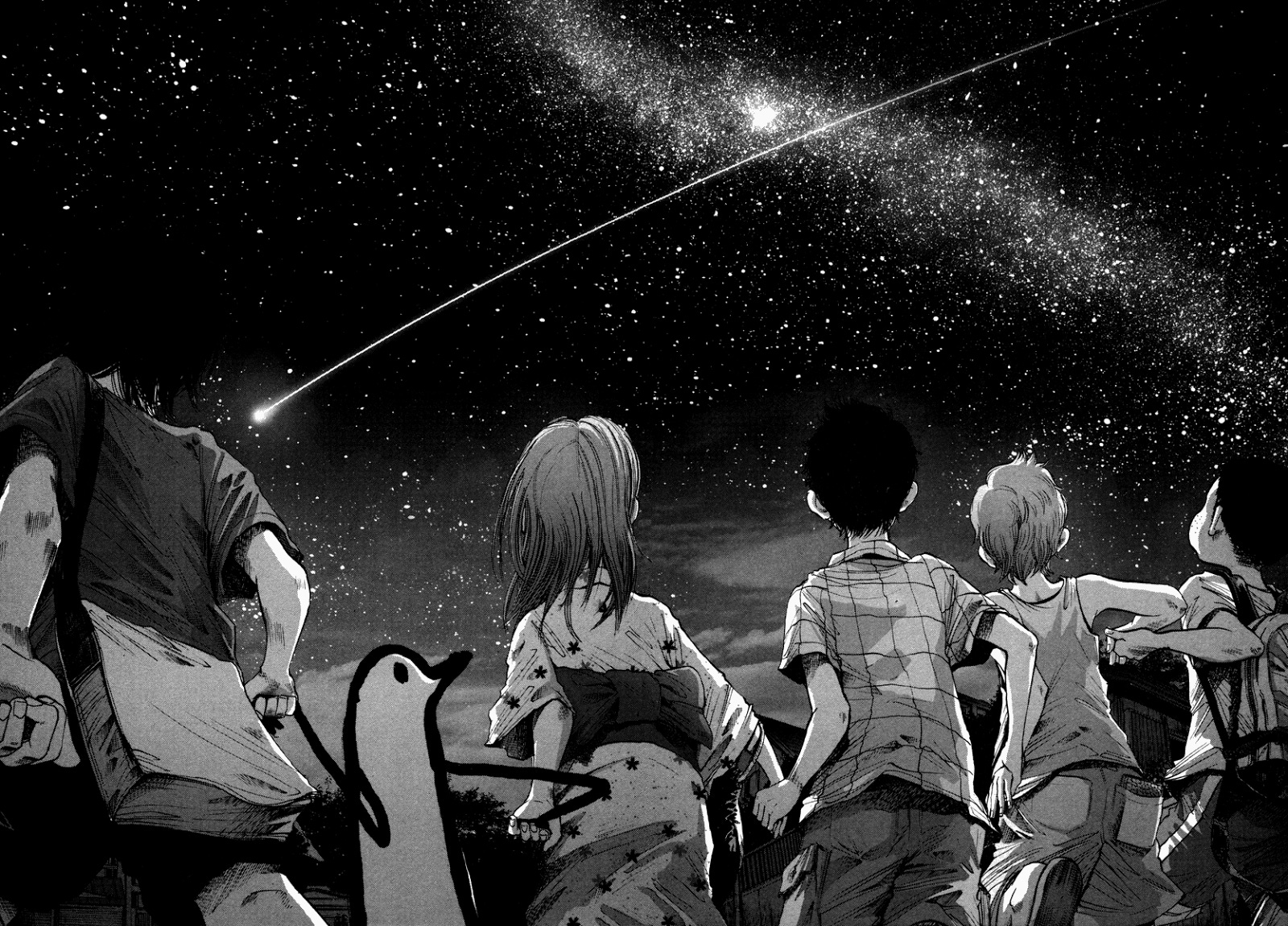
Its focus on high-quality, still images allows for a heavy focus on powerful, hard-hitting moments; whether they are action-packed or emotional.
Due to its usage of text for all dialogue and description, it allows for a different, more seamless feel to its descriptions and inner monologues.
Examples of Strong Manga with these Criteria:


Oyasumi Punpun (Known for a hard-hitting, emotional story with beautiful art, that many deem impossible to successfully transfer over to an anime adaptation.)
Blue Lock (A manga series that has very distinctive depictions of action and visual metaphor, done exceptionally well, to the point where many people consider the manga more “action-packed” than its anime adaptation)
Berserk (The story of Guts, the Black Swordsman, is renowned for Kenturo Miura’s stunning, detailed art style. Many will argue that the manga is an experience that is far superior to the anime.)
Anime’s Unique Strengths
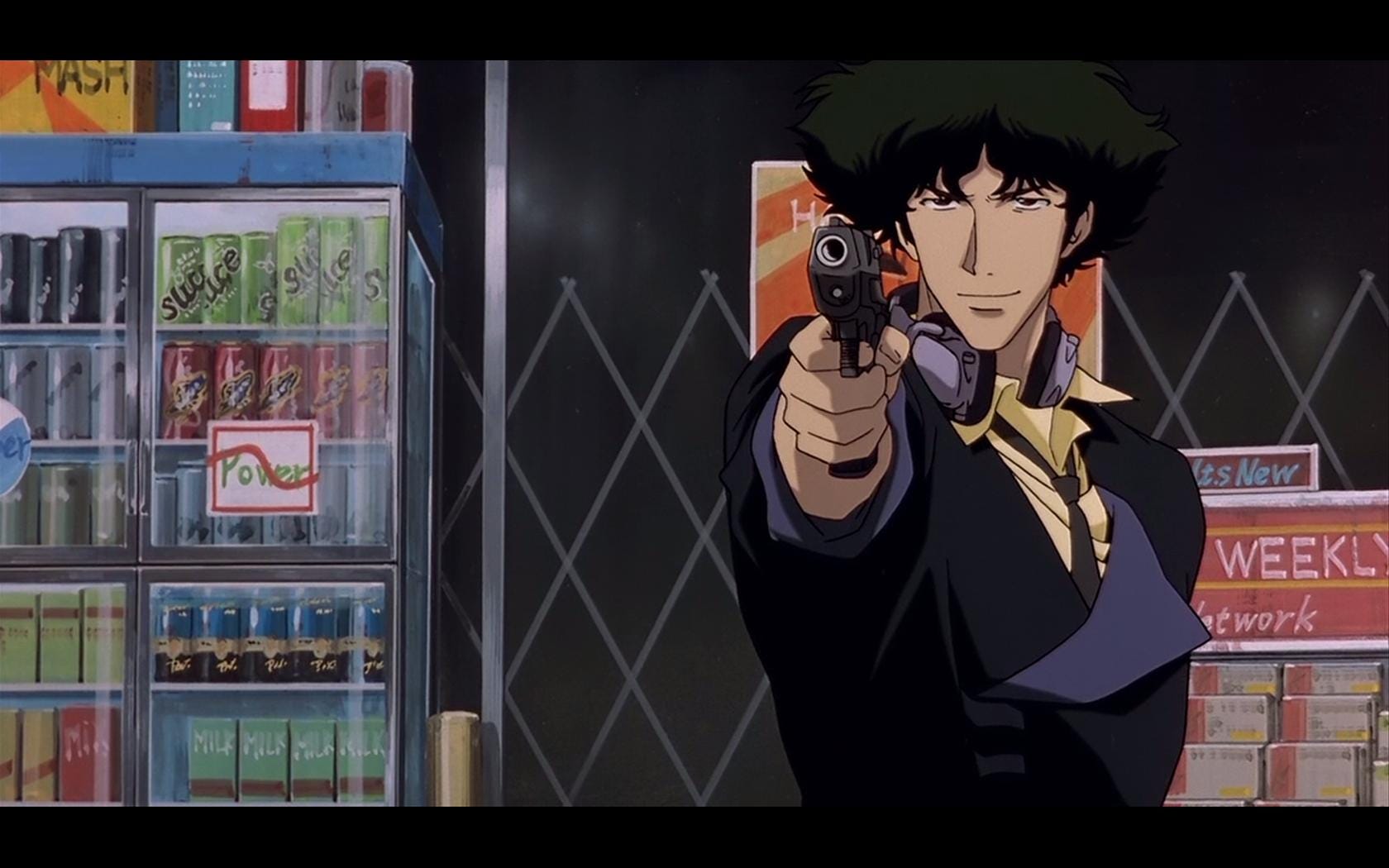
Anime offers an unmatched sense of frantic, action-packed motion through animation, to an extent where visual story-telling becomes massively important—both in the action scenes, and even in the small, emotional moments.
It offers music; in and of itself, a beautiful way of conveying emotional meaning.
The fact that it utilizes voice actors, allows for another human element that can draw one into a story.
Examples of Strong Anime with these Criteria:


Cowboy Bebop (A classic, space-western anime that, with music, smooth animation, and amazing backgrounds, draws many into the dirty, futuristic world it depicts.)
Mob Psycho 100 (Although its webcomic by mangaka ONE has similar emotional storytelling beats, the anime has become renowned for balancing emotional, sincere moments with stunning animated sequences.)
Full Metal Alchemist: Brotherhood (Its original manga, although already a fantastic story in its own right, was elevated to a new level via its emotional music, its wonderful animation, as well as the voice acing.)
In Conclusion…
It was obvious from the get-go; manga and anime have their own strengths, their own weaknesses, and numerous differences as mediums for storytelling.
However, just because something is obvious, doesn’t make it any less nuanced, any less interesting, any less of something to appreciate. These differences allow for drastically different types of stories to be appreciated—or in some cases, entirely different ways to appreciate the same story.
I love both of these mediums, and sometime in the future, I’m sure I’ll have the opportunity to talk more about specific stories from each medium, as well as different types of mediums I love overall.
For now, though, I think I can be happy in remembering and shedding light on a little something I love and find interesting; and I hope it was interesting for you too.